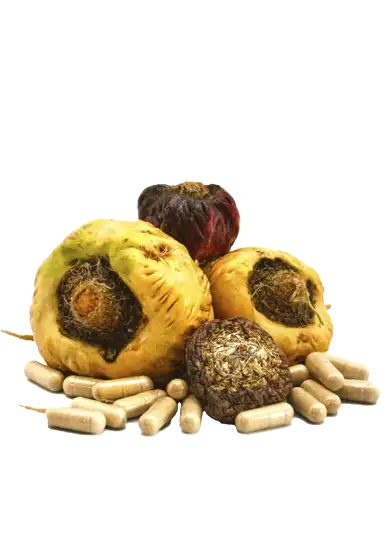

Maca extracts are the fastest-growing segment in the superfood ingredient market, driven by supplement manufacturers seeking higher potency in smaller serving sizes. Understanding extract ratios, standardization markers, and formulation compatibility is essential for product development teams.
Understanding Extract Ratios
Extract ratio indicates concentration: a 10:1 extract means 10 kg of raw maca was used to produce 1 kg of extract. Higher ratios mean more concentrated bioactives but different flavor profiles and solubility characteristics. Common ratios available: 4:1 (general supplements), 10:1 (high-potency capsules), 20:1 atomized (beverages and sachets).
Standardization Markers
The two primary bioactive groups in maca are macamides and glucosinolates. For extract standardization: Macamides — 10:1 extract typically standardized to ≥0.6% macamides (HPLC method), 20:1 to ≥1.2%. Glucosinolates — particularly relevant for red and black maca varieties, standardized to ≥0.4-0.6% (spectrophotometric method). Request HPLC chromatograms with your COA to verify standardization claims.
Formulation Compatibility
Maca extract compatibility considerations: Capsules — excellent compatibility, 300-500mg per capsule typical dose. Tablets — good compressibility, may need flow agents for direct compression. Powdered beverages — atomized 20:1 preferred for instant solubility (>95%). Gummies — extract 10:1 compatible, but strong flavor requires masking agents. Tinctures — alcohol or glycerin extraction, typically 1:3 or 1:5 ratio.
Stability and Shelf Life
Properly stored maca extract (sealed, cool, dry, away from light) maintains potency for 24-36 months. Key stability factors: moisture content must remain below 6%, protect from oxidation with nitrogen-flushed packaging, and avoid temperatures above 25°C during storage. Accelerated stability data (40°C/75% RH for 6 months) available upon request.
Sourcing Considerations for Manufacturers
When evaluating maca extract suppliers, prioritize: vertically integrated operations (farm-to-extract), in-house analytical lab with validated methods, third-party COA from recognized labs (SGS, Eurofins, Bureau Veritas), regulatory documentation package (DMF, allergen statements, TSE/BSE declarations), and consistent batch-to-batch quality with specification guarantees.